Articles
Articles
A series on the decisions behind tools for agent-driven development: the problem, the alternatives, and what we chose.
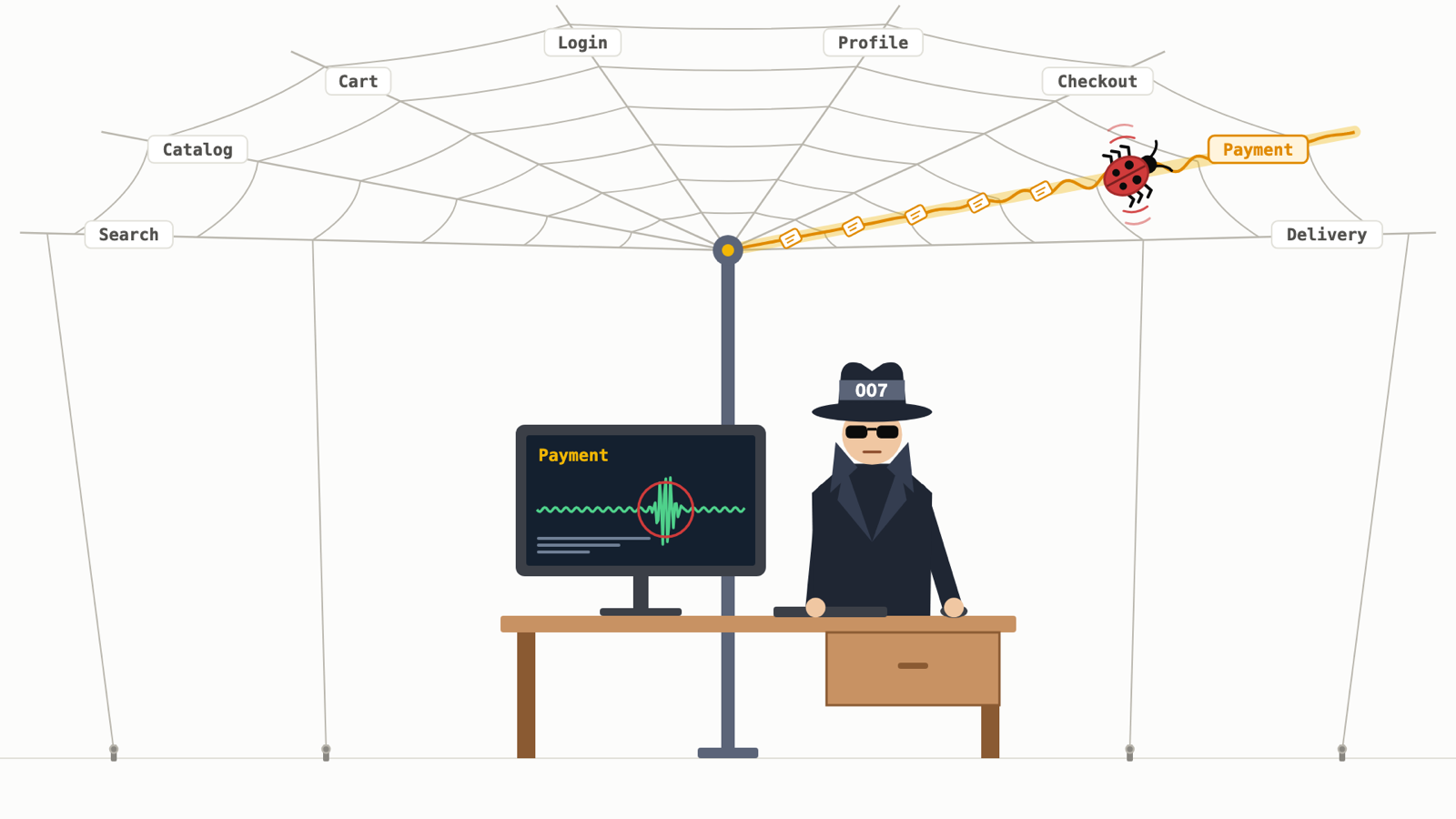 2026-11-11Trace till debug: agentic self-check by logsA system checks its own correctness by its logs, and when a check fails, an agent turns on detailed logging for the failing branch and debugs it by the same logs.
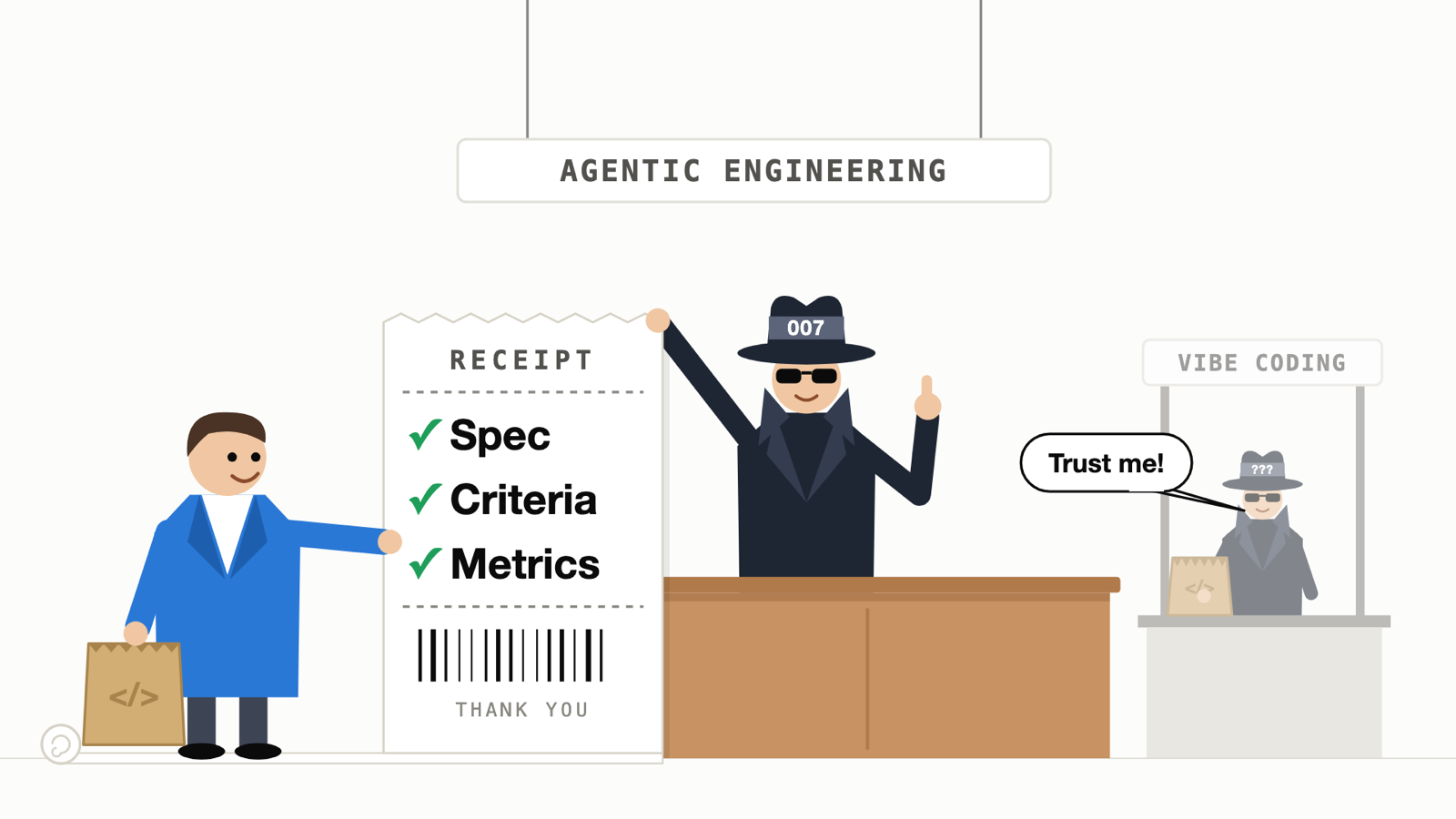 2026-11-09What separates agentic engineering from vibe coding?Vibe coding gets you code. Agentic engineering should get you code you can account for: three receipts for every change, a specification, criteria and metrics.
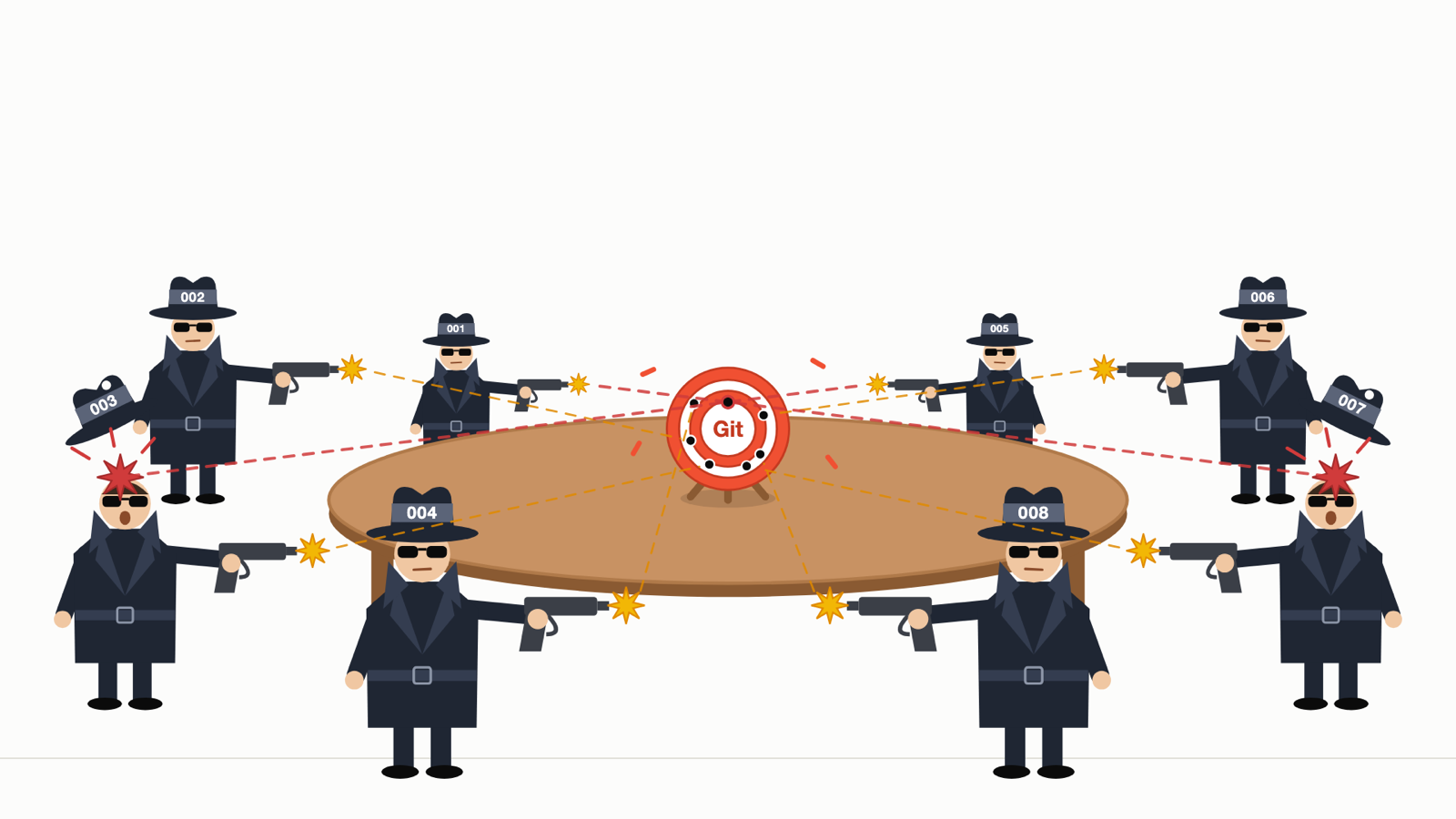 2026-11-06Ten coders, one codebaseTen coding agents can write code at once, but only one can merge at a time: a working copy per task, order from the plan, and checks before and after each merge.
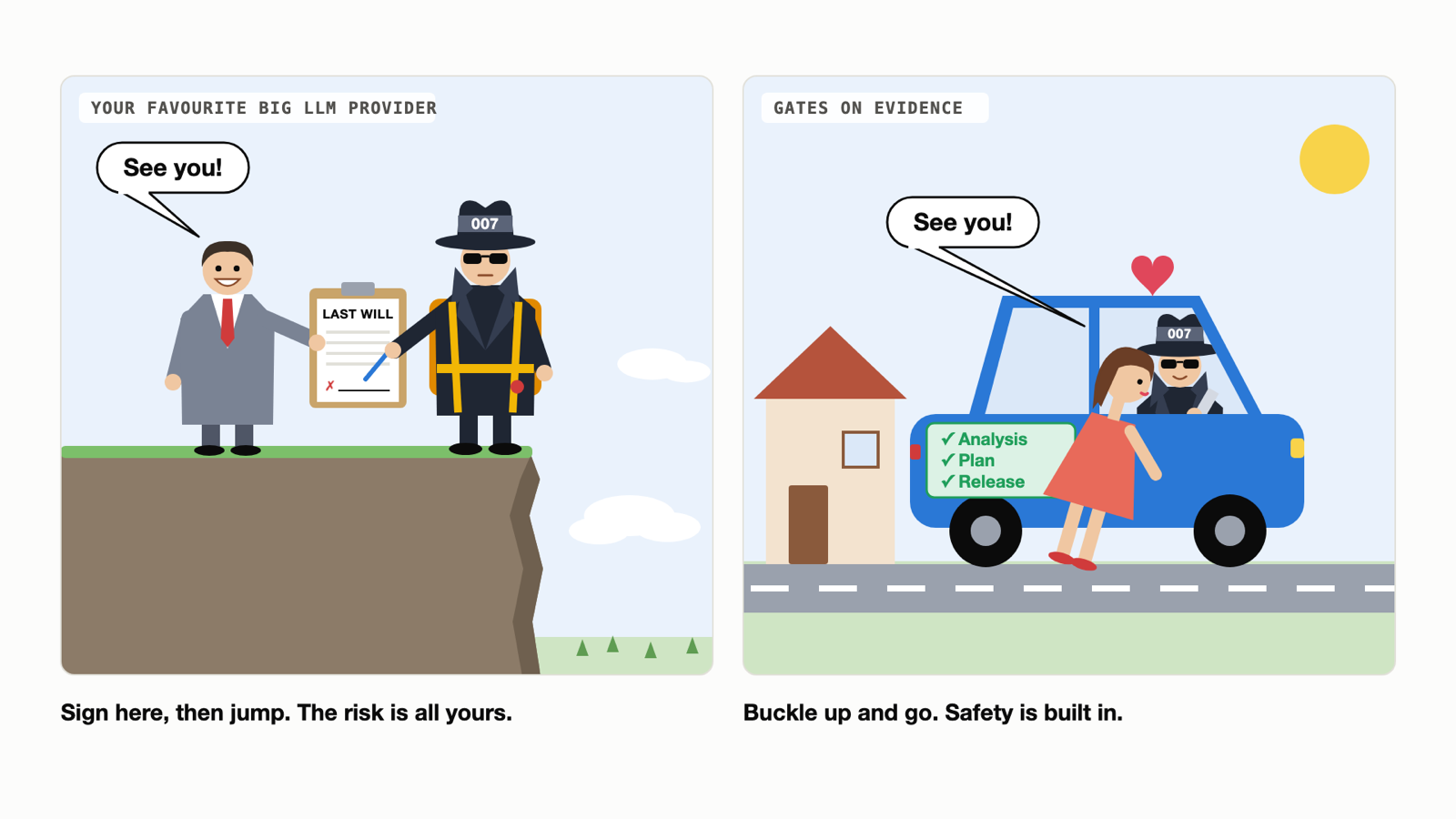 2026-11-04Full autonomy is dangerous, but approving every step kills your speedIf a person approves every step, agents wait for the person; if an agent approves its own work, the answer is always yes. Gates that open on evidence sit in between.
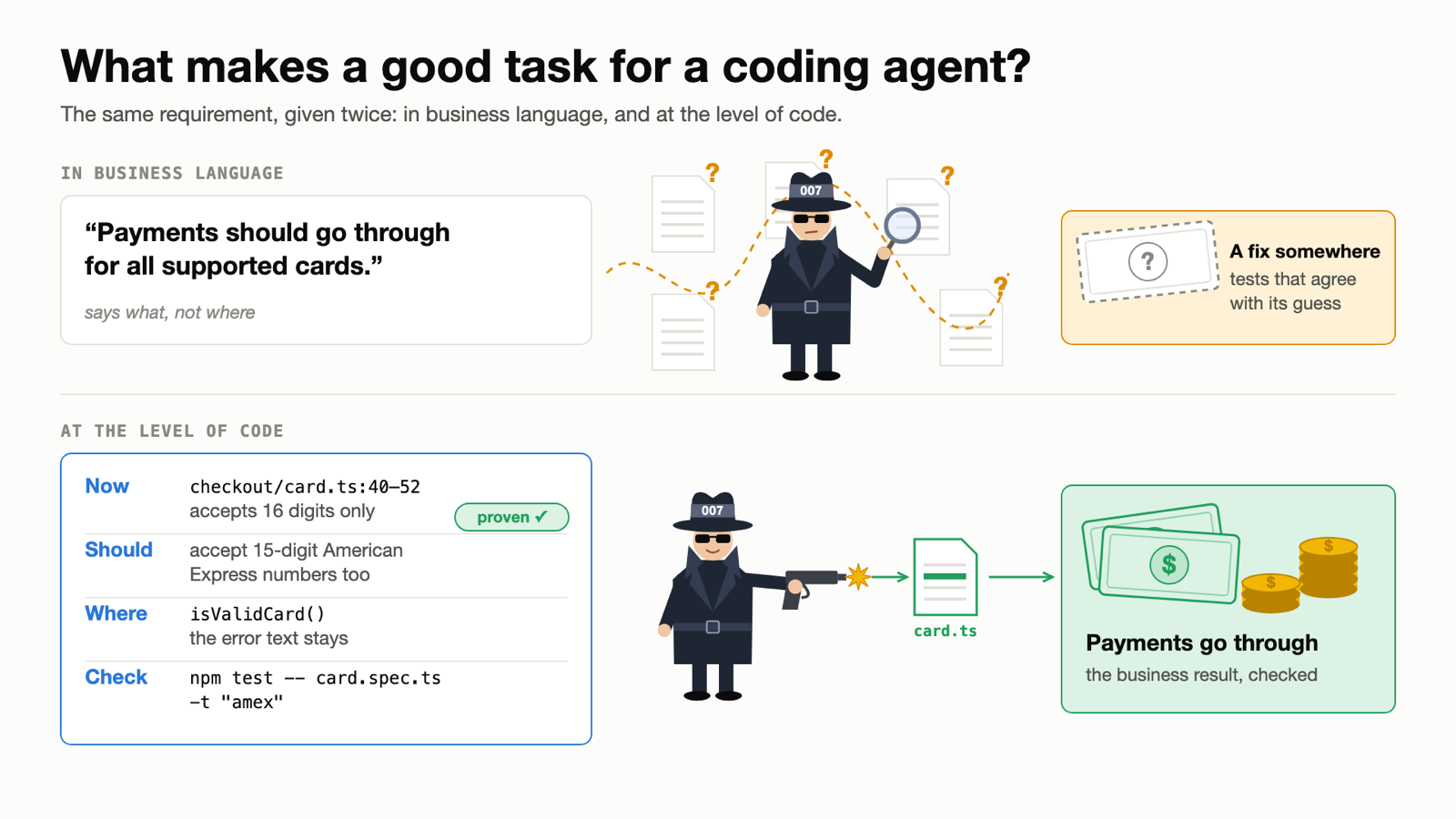 2026-11-02What makes a good task for a coding agent?Given a task in business language, a coding agent redoes the analysis alone. A good task says what the code does now, what it should do, where, and how to check.
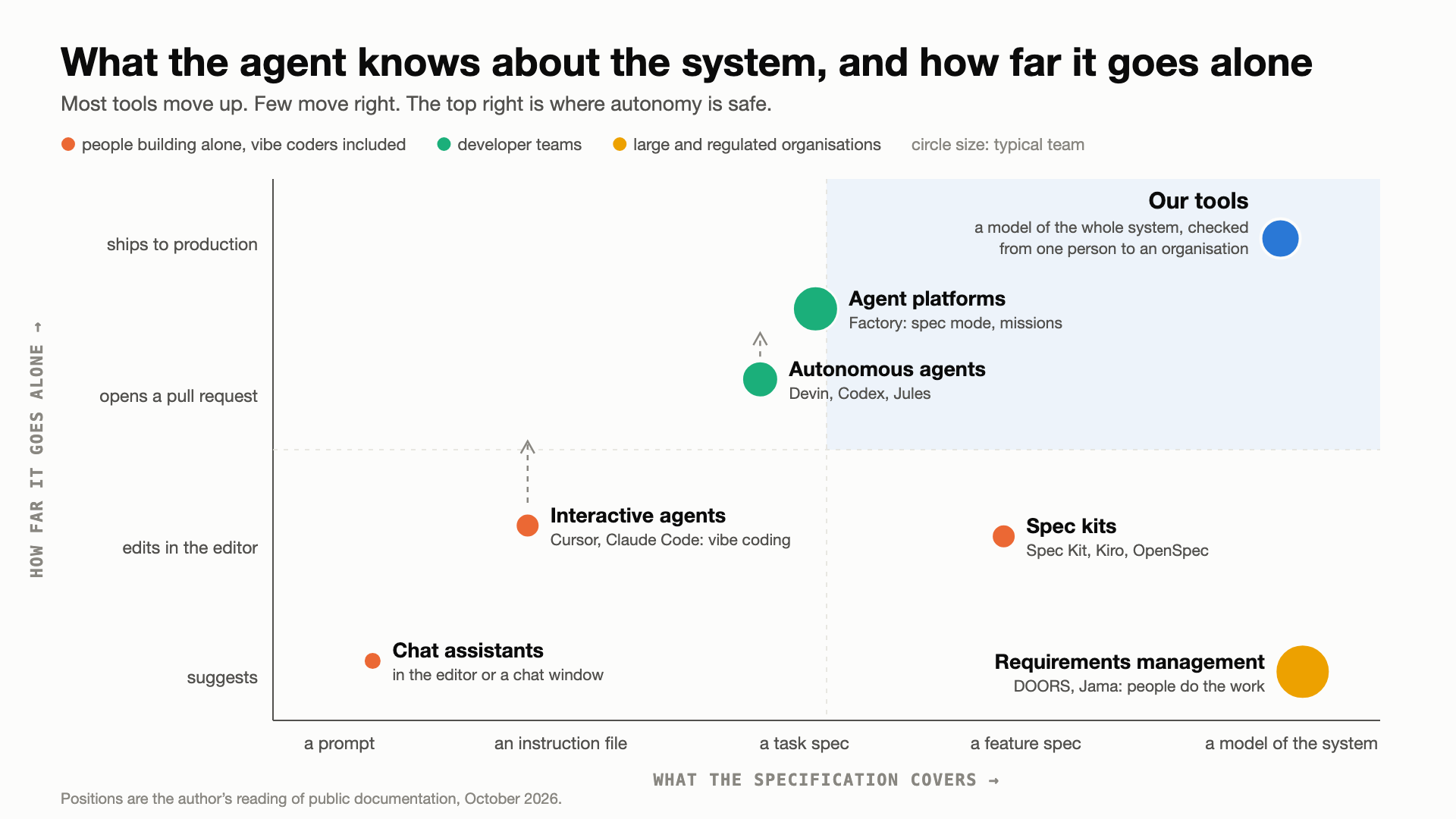 2026-10-30Coding agents specify the task. Someone has to specify the systemA map of agent tools by what their specification covers and how far the agent goes alone, and who each family is for. Most tools move up; few move right.
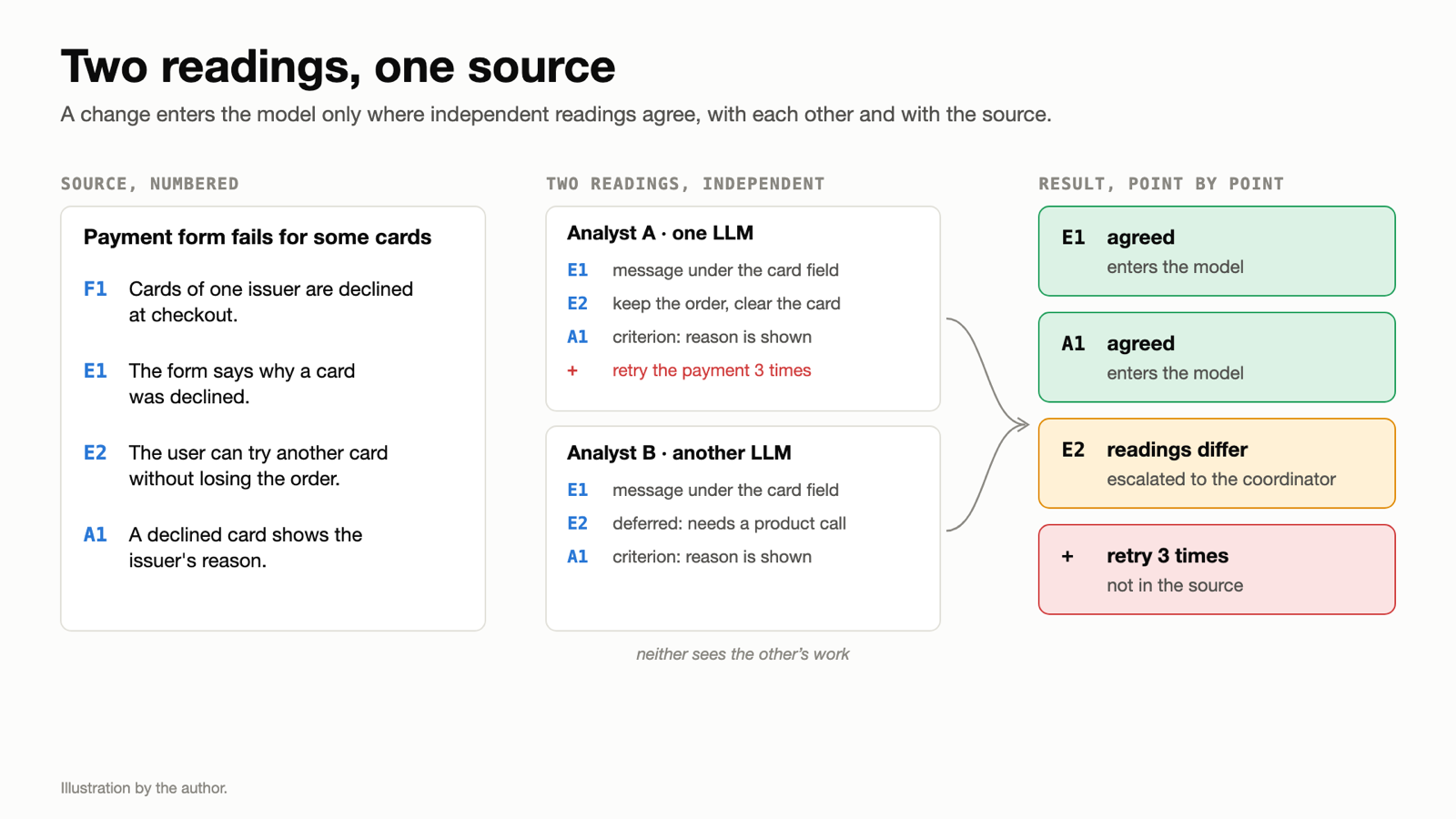 2026-10-26How to keep an analyst agent from drifting without losing the detailsA single analyst agent fills gaps and drops points. Independent readings on different language models must agree, and every numbered source point needs an answer.
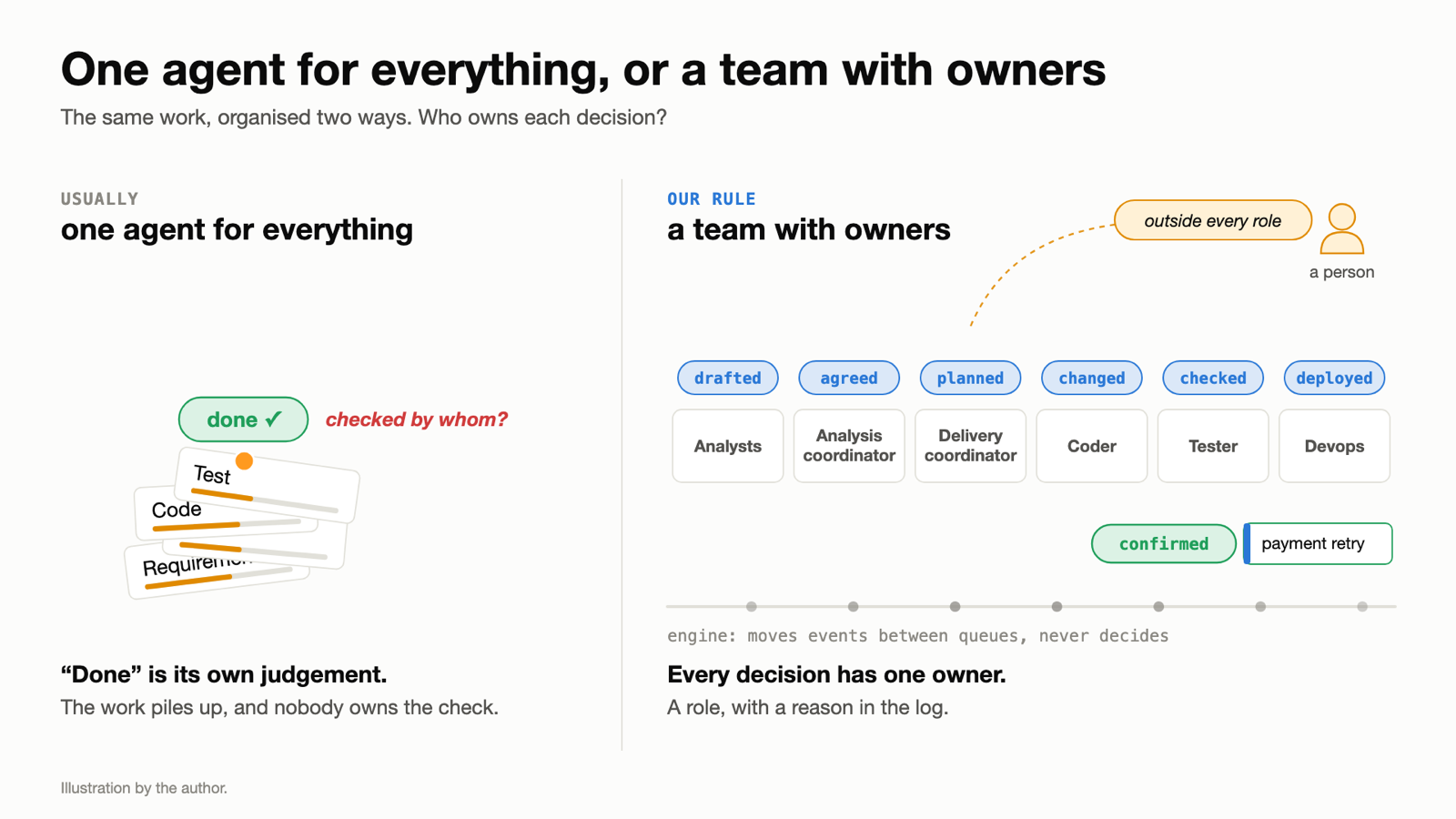 2026-10-22Why a team of agents should be organised like a team of peopleOne agent for everything drifts on a real project. A team of roles, where every decision has exactly one owner, keeps the work explainable and fixable.
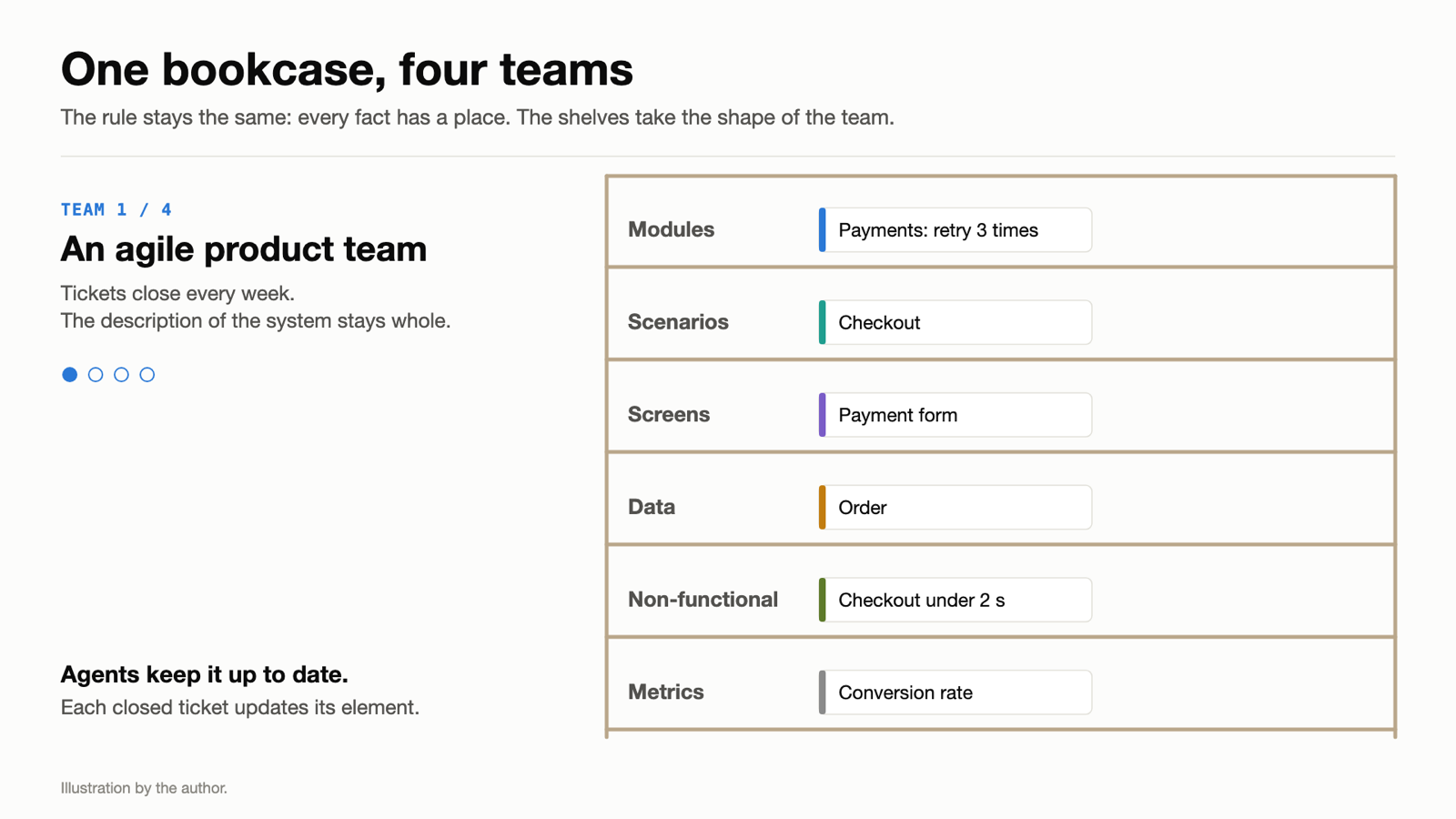 2026-10-19Agile dropped the documentation. Agents can bring it backFour teams, one rule: an agile team, a medical software team under IEC 62304 and ISO 14971, a game studio and a solo builder each get a methodology of their own.
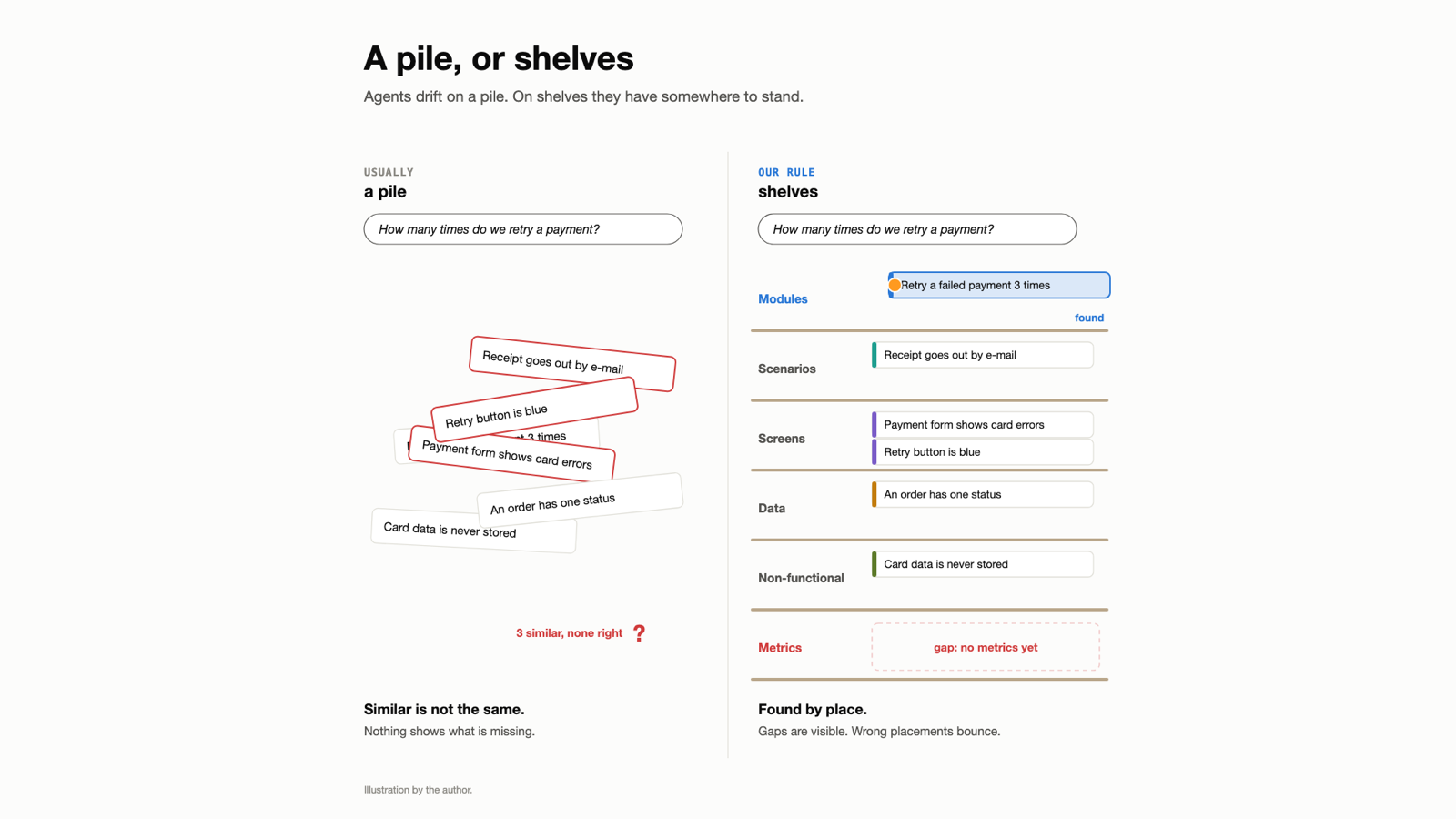 2026-10-16Agents drift. A methodology gives them footholdsMemory that infers its structure on read never shows what is missing; a methodology declares the domain's ontology, so facts are found by place and gaps show.
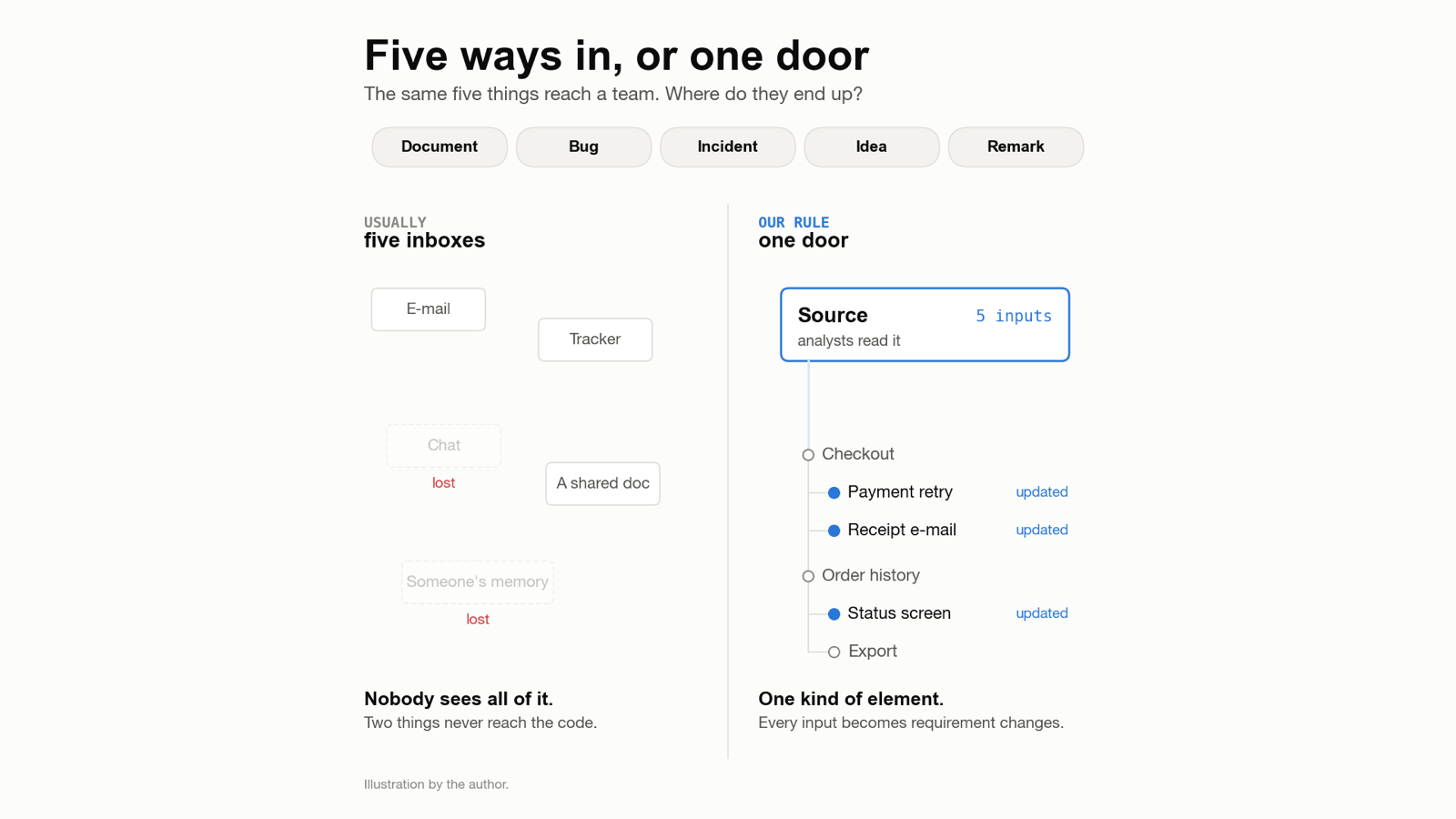 2026-10-14Everything that reaches a team should come in through one doorDocuments, bugs, incidents, ideas and remarks usually land in five places; making each of them a source that analysts read keeps agents from seeing half the story.
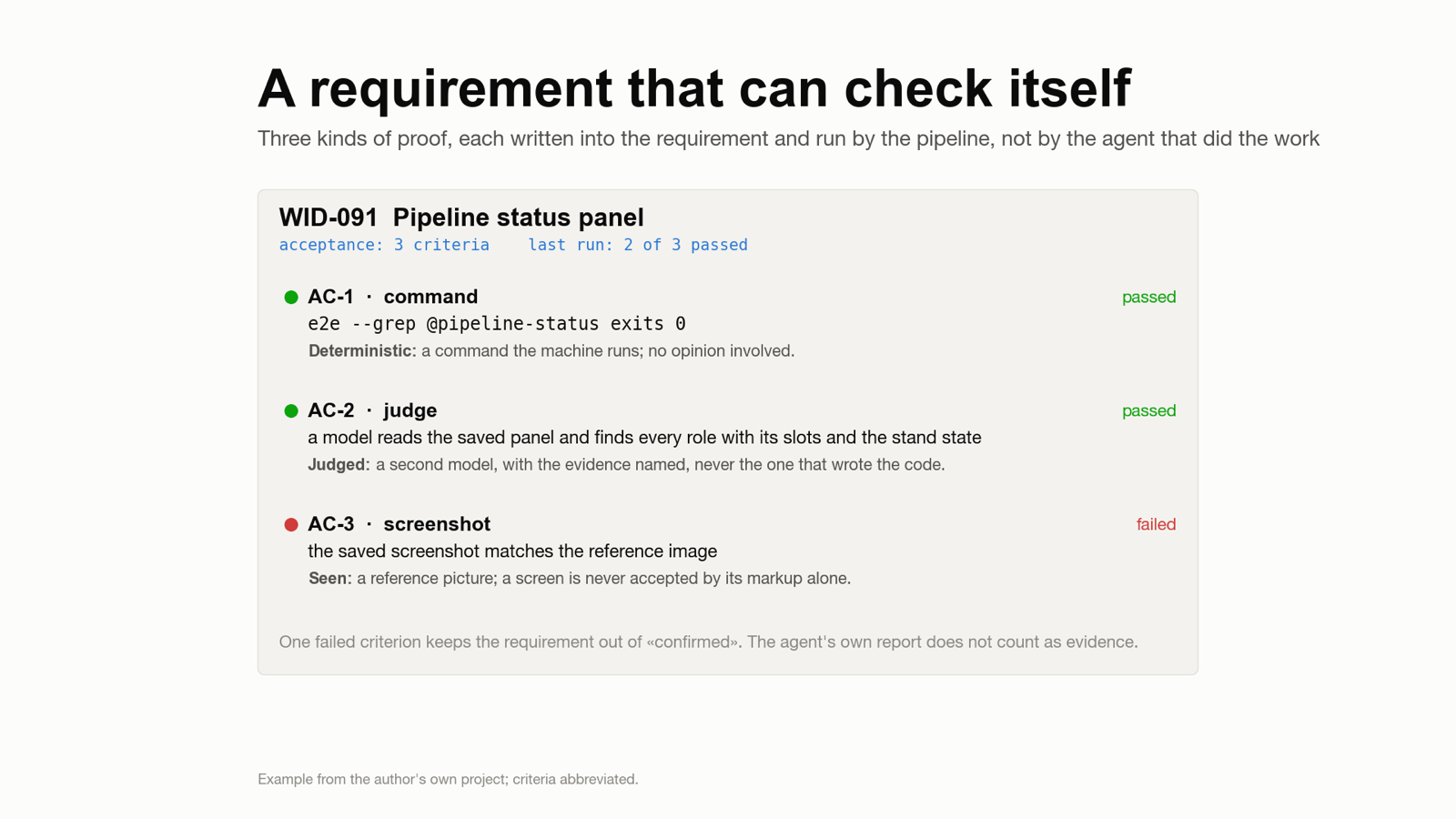 2026-10-12A requirement should say how to check itselfAn agent that reports "done" grades its own work, so each requirement carries its acceptance criteria: a command, a judgement with named evidence, or a picture.
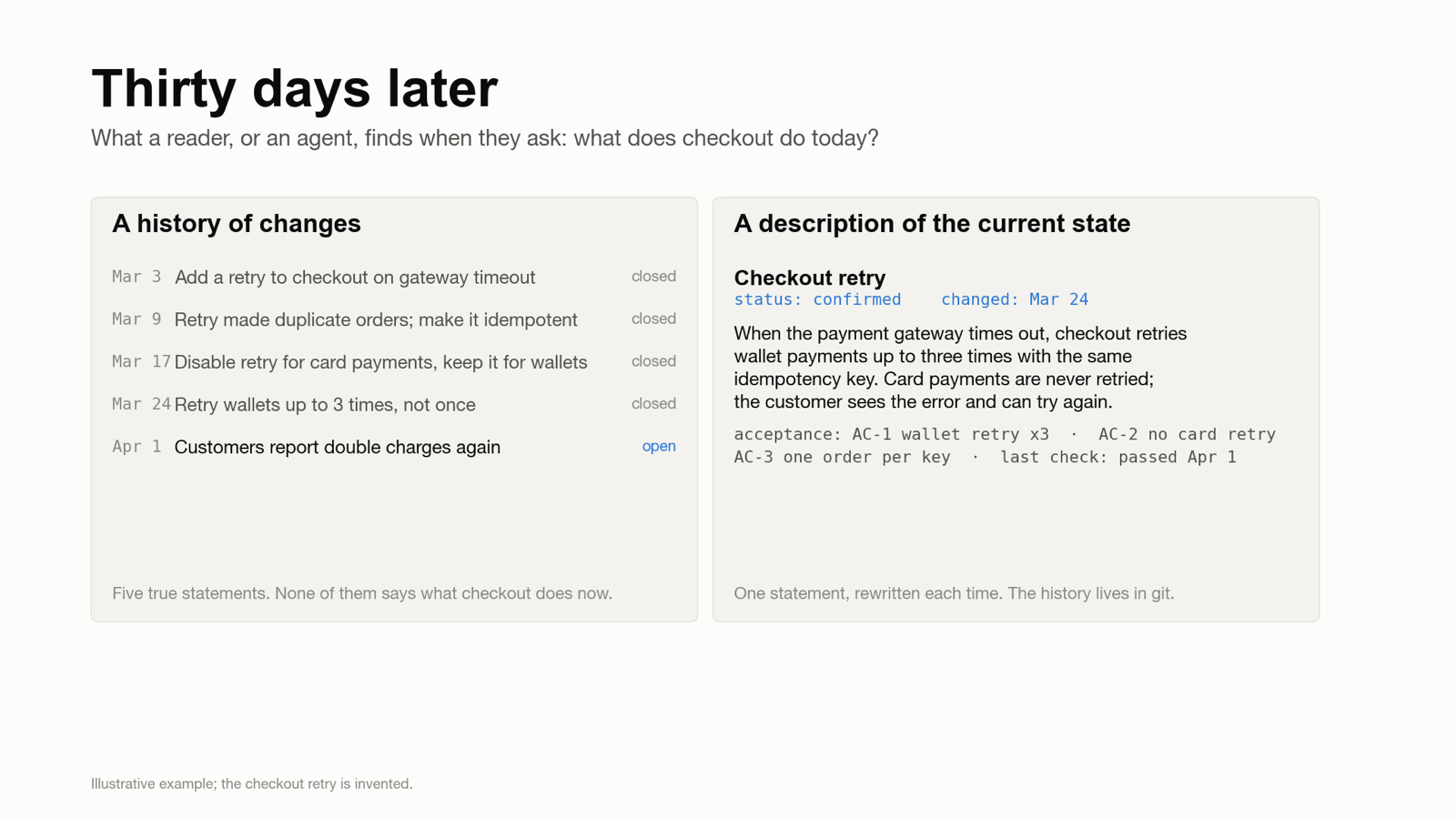 2026-10-09The model should describe the system as it is, and leave the history to gitRequirements written as changes pile up into true statements that never say what the system does today; a requirement file should describe the current state.
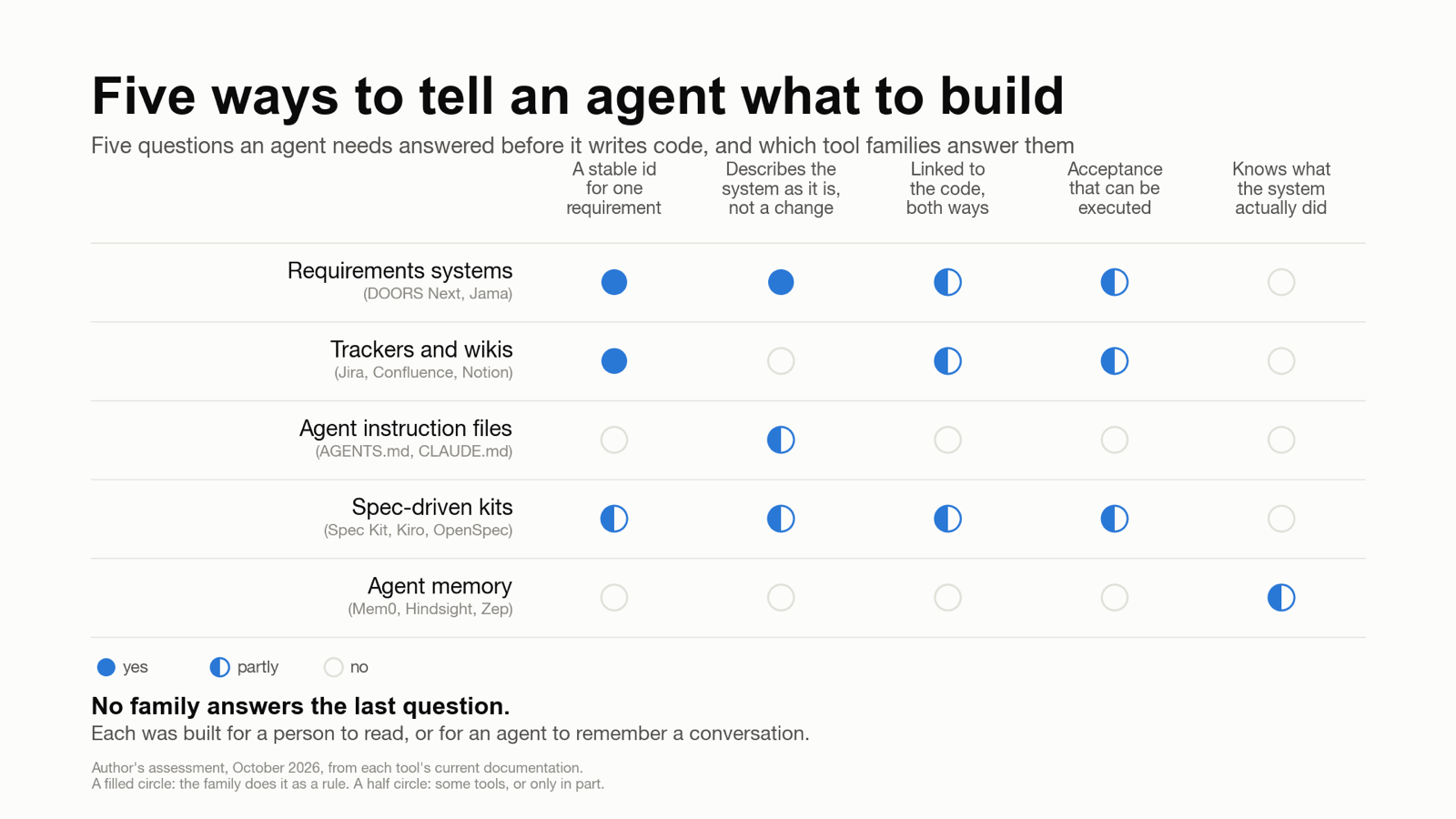 2026-10-07Five ways to tell an agent what to build, and where each one stopsFive families of tools hold what an agent needs to know about a system, and none of them records what the running system actually did.
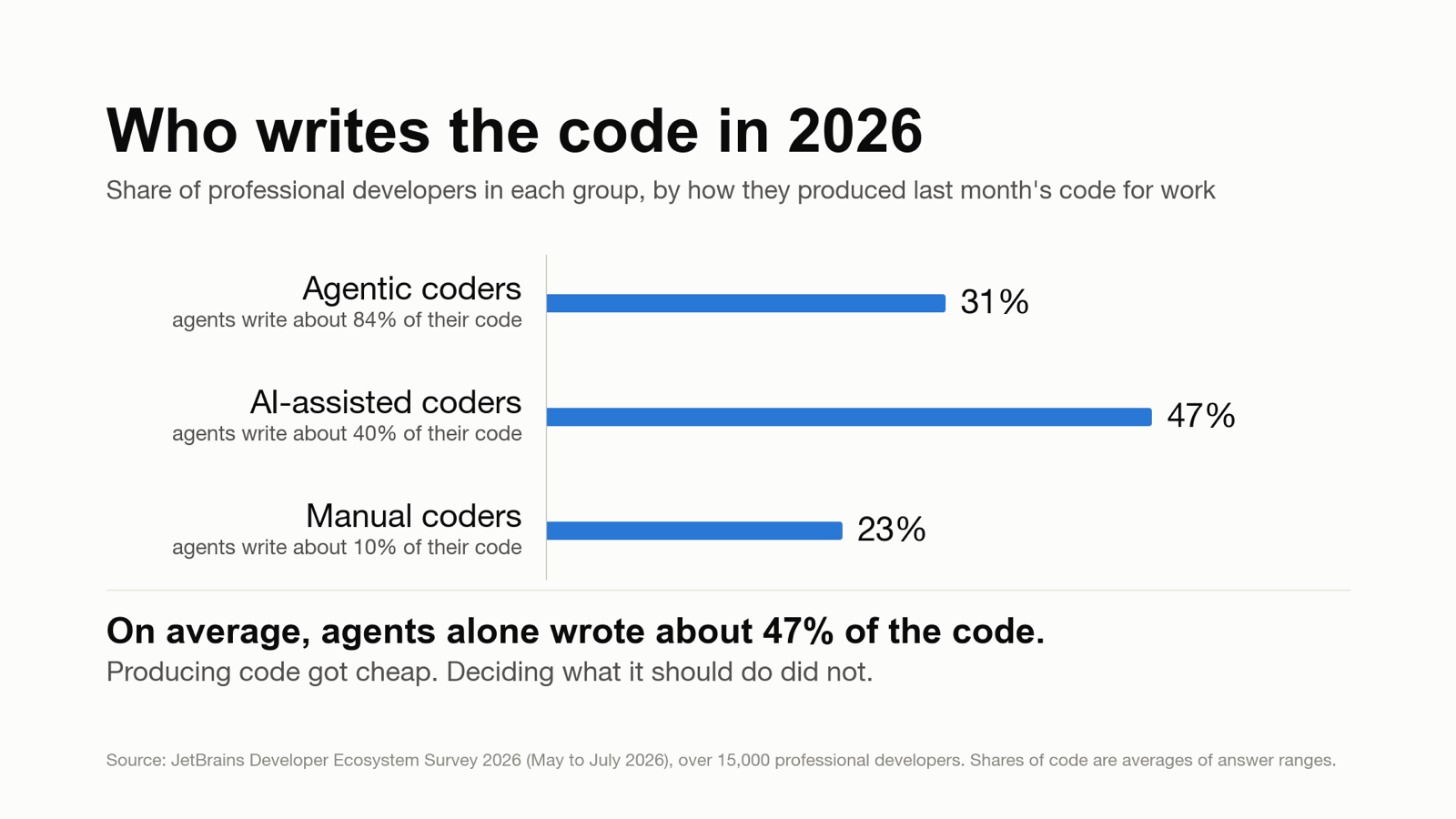 2026-10-05Code got cheap in 2026. Knowing what to build did not.Agents now write about half of professional developers' code, so the hard part has moved to knowing exactly what should exist.